Landing Page Copywriting Case Study - +220% Call Rate
CDL Worker is a trucking jobs platform with steady inbound traffic from drivers looking for work. The page was not converting that traffic into calls. We rewrote the recruitment copy around clearer offer positioning, driver-focused language, and a job-listing structure built to motivate qualified applicants to act. Call rate tripled.
Project Overview
CDL Worker is a job platform connecting commercial truck drivers with carriers and trucking companies. The site had consistent organic traffic from drivers actively looking for work. The problem was that very few of them were picking up the phone. A 1% call rate from a qualified, motivated audience signalled that the page was losing people it should have been converting. This recruitment page copywriting project was focused on closing that gap.
The copy was not giving drivers a clear enough reason to choose this platform over the alternatives, was not speaking in the language drivers actually use, and was not presenting job listings in a way that made applying feel straightforward. We rewrote the page to fix all three.
The Challenge
Drivers arriving on the page had intent. They were looking for work. The page was not doing enough to make CDL Worker the obvious place to find it.
- The offer positioning was generic and did not differentiate CDL Worker from other job boards in a way that mattered to drivers
- Copy used business language rather than the direct, plain-spoken language that resonates with working drivers
- Job listings were structured as information items rather than opportunities, with no clear call to action at the right moment
- The page had no friction reduction for drivers who were close to calling but needed one more reason to do it
- Session time and bounce rate indicated that visitors were reading briefly and leaving rather than engaging with what was on offer
What We Changed
Offer positioning and headline copy
The headline and opening section were rewritten to make the platform's value proposition immediately clear to a CDL driver. The copy was repositioned around what drivers actually want from a job search, not what the platform wants to say about itself.
Driver-focused language throughout
The body copy was rewritten using the direct, no-nonsense language that working drivers respond to. Industry terminology was used correctly. The copy felt like it came from someone who understood the job, not a generic recruitment template.
Job-listing structure
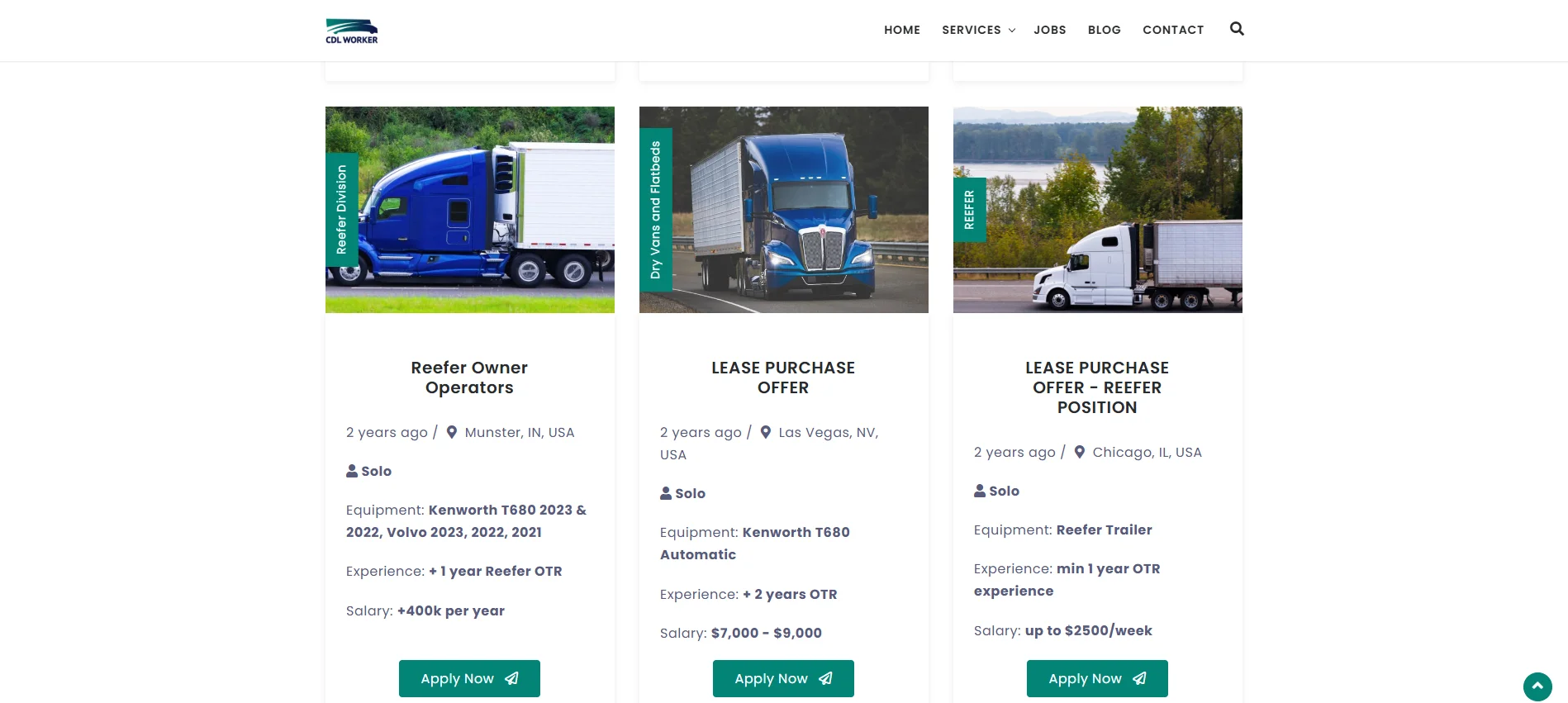
Job listings were restructured to lead with the details that matter most to drivers: route type, pay, home time, and benefits. Each listing was given a clear next step rather than leaving the driver to figure out what to do next.
Friction reduction before the call
Copy was added at the critical decision point before the CTA to reduce the hesitation that was causing qualified drivers to leave without calling. Short, direct proof points replaced the absence of reassurance that had been costing conversions.
CTA and application flow
The call-to-action was rewritten to be specific and outcome-focused. The application flow was simplified in copy so that the next step felt clear, low-effort, and worth taking for a driver who had already read this far.
The Recruitment Page
A recruitment page built to convert qualified drivers into callers, with offer positioning, driver-language copy, and a job-listing structure that makes applying feel like the obvious next step.
The Results
The recruitment page copywriting results were measured post-launch against the equivalent period before the copy rewrite went live.
More drivers staying and engaging
Tripled from pre-rewrite baseline
Drivers reading more, leaving less
Why It Worked
The improvement came from treating the recruitment page as a conversion rate optimization copywriting problem rather than an information problem. Drivers already knew what a CDL job was. What they needed was a reason to choose this platform and a clear path to act on it.
- Rewriting the offer in driver language made the platform feel immediately relevant to the people it was trying to reach, rather than generic
- Structuring job listings around pay, route type, and home time addressed the specific factors drivers weigh when deciding which opportunities to pursue
- Adding friction-reducing copy before the CTA gave qualified drivers the final push they needed to go from interested to calling
- The increase in session time indicated that drivers were actually reading the page rather than scanning and leaving, which reflected a stronger copy-audience match
- A tripled call rate with the same traffic confirmed that the audience was already there. The copy was the variable that needed to change.
Let's Build Your
Success Story
Get a free strategy call and find out exactly how we'd approach your copy.
Book a Free Call